Fruit machines and slots6 min read
What is the history of fruit machines, from Liberty Bell to touchscreens?
Why slots show cherries, bars and sevens: a short history from the 1890s Liberty Bell to gum vendors, electromechanical machines and video slots.
Contents
Slot machines show fruit because early machines were sold with a fruit-flavoured gum vendor, and the symbols stayed after the gum was gone. Charles Fey built the first three-reel machine with automatic payout between 1887 and 1895, and the first video slot followed in 1976. Dates differ slightly between sources, so we give ranges where they do.
| Year | Event |
|---|---|
| 1887 to 1895 | Charles Fey devises a three-reel machine with automatic payout |
| 1893 | Sittman and Pitt of Brooklyn make a poker-based machine with five drums |
| 1898 and 1899 | The Liberty Bell design (1898) and the surviving machine (1899) |
| 1907 | Mills produces the first copy of the Liberty Bell |
| 1963 | Bally’s Money Honey, the first fully electromechanical slot |
| 1976 | The first video slot, developed by Fortune Coin Co. |
| 1984 | Inge Telnaes patents reel selection by a random number generator |
| 1994 and 1996 | Second-screen bonus rounds appear in Australia (1994) and the United States (1996) |
Our own Classic Hot Fruits keeps the classic layout, and the later sections show its numbers. Two of the mechanics that came much later are covered in how tumbles work and hold and win explained.
Where does the name come from?
The term slot machine comes from the slot where coins go in and come out. The nickname one-armed bandit refers to the large mechanical lever on the side of early machines. In the United Kingdom the everyday name is fruit machine.
Who built the first slot machine?
Charles Fey, a mechanic in San Francisco, devised a three-reel machine with automatic payout at some point between 1887 and 1895. The Liberty Bell design is dated 1898, and a machine from 1899 is in the Nevada State Museum. It used three spinning reels and five symbols: horseshoes, diamonds, spades, hearts and a Liberty Bell, which gave the machine its name. Three bells in a row paid the top prize, ten nickels, or 50 cents. Because gambling was illegal in California, Fey could not patent his device, and many competitors copied it. Mills produced its first copy in 1907. Another early design, from Sittman and Pitt in Brooklyn in 1893, was built on poker with five drums, and its prizes were things like drinks or cigars.
Why do slot machines show fruit and bars?
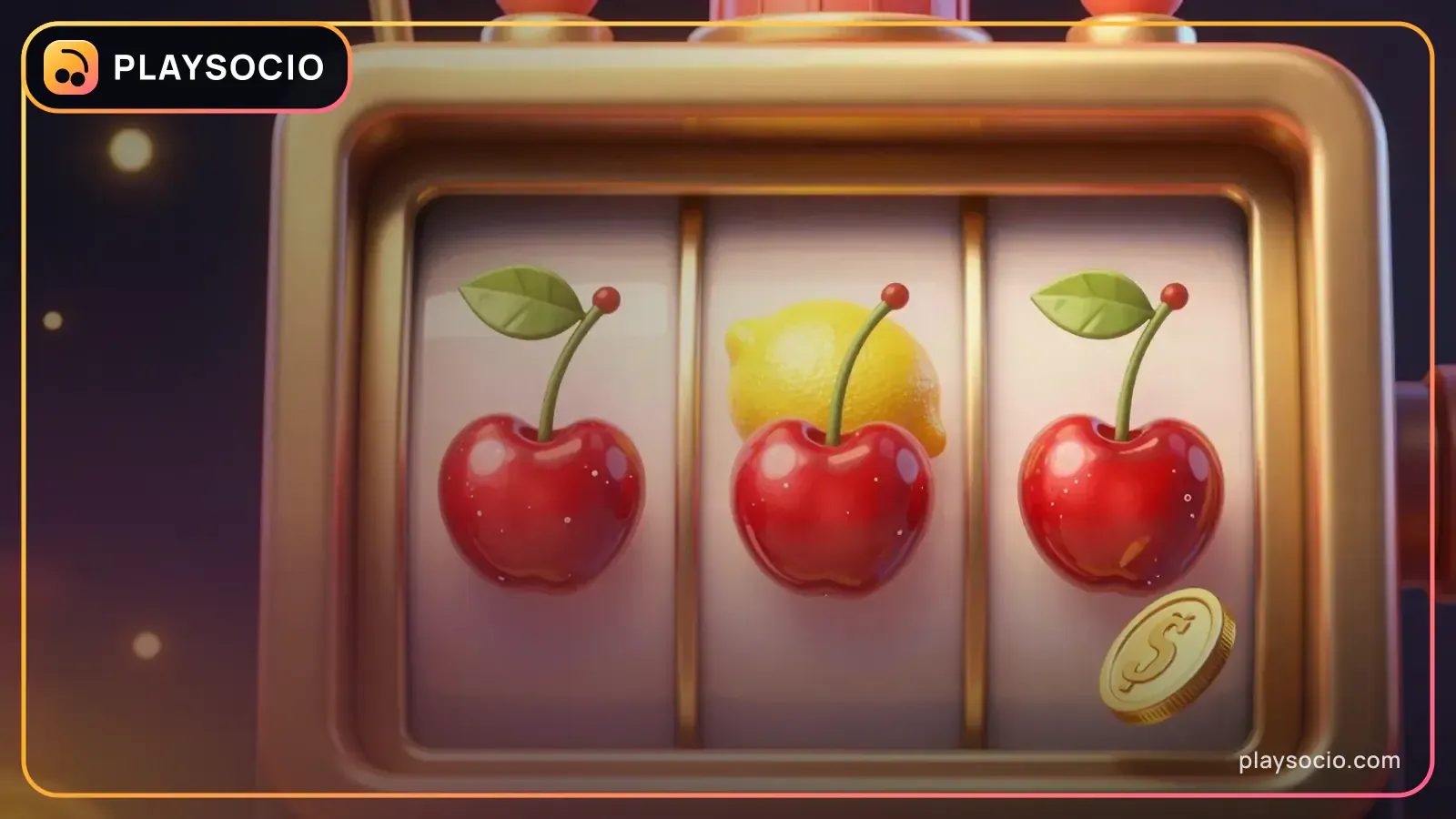
Gambling machines drew legal trouble in many places, and one way around the law was to award food prizes. Mills made a machine called the Operator’s Bell that could carry a gum-vending attachment. The gum was fruit flavoured, so fruit went on the reels: lemons, cherries, oranges and plums. A picture of a stick of Bell-Fruit Gum appeared on the machine, and that picture is given as the origin of the bar symbol. By 1908 bell machines were found in cigar stores and barber shops. Lucky sevens are listed among the classic symbols, but the sources we checked do not explain where they come from.
What did electromechanical machines change?
In 1963 Bally released Money Honey, the first fully electromechanical slot machine and the first with a bottomless hopper and automatic payout of up to 500 coins. No attendant was needed to pay a large win, which made bigger payouts and more machines on the floor practical.
What did microprocessors and virtual reels change?
On an early three-reel machine with 10 symbols per reel there were only 10 x 10 x 10 = 1,000 combinations. The count of symbols per reel grew to about 22, which gives 22^3 = 10,648 combinations. Electronics removed the physical limit. A virtual reel of 256 positions gives 256^3 = 16,777,216 final positions, and a symbol can be weighted so that its displayed frequency differs from how often it appears on the visible reel. Designers could then build larger jackpots and finer paytables, and the weight tables of today’s games descend from this. In 1984 Inge Telnaes patented a device that selects the reel position with a random number generator.
What is a UK fruit machine?
Fruit machines in pubs, clubs and arcades often have three reels with 16 to 24 symbols each. Players may be offered a hold, which keeps one or more reels for the next spin, and a nudge, which moves a chosen reel one step. These features give a sense of skill, but the payout percentage stays the same. The minimum payout in the UK is 70%, and pubs often set it around 78%. Other jurisdictions have their own minimums: Nevada 75%, New Jersey 83% and Mississippi 80%.
How did slots become video, online and mobile?
The first video slot was developed in 1976 in Kearny Mesa, California, by Fortune Coin Co. of Las Vegas, and the Nevada State Gaming Commission approved it after changes to defeat cheating. In 1994 an Australian game, Three Bags Full, introduced a second-screen bonus, and in 1996 WMS’s Reel ’Em In did the same for American video slots. Online play and smartphones later moved the same mathematics into a browser. Designers introduced tumbling reels, pay-anywhere grids, hold-and-win rounds and buy features, and social casinos, which use virtual coins only, became a category of their own.
What do our own numbers show?
Classic Hot Fruits is a five-reel game with 10 lines and a wild. Each reel is a weight table with no physical strip behind it, and the weights add up to 72.5. One payline has 10^5 = 100,000 symbol combinations, and the weights decide how likely each one is.
| Symbol | Share of each reel | Run of 3 on one payline | Run of 5 on one payline |
|---|---|---|---|
| Cherry | 27.6% | 2.4% | 0.40% |
| Lemon | 23.4% | 1.7% | 0.20% |
| Bell | 2.8% | 0.037% | 0.0003% |
| Seven | 2.1% | 0.025% | 0.0002% |
Five sevens on a given line come about once in 500,000 spins of that line. The game as a whole returns something on 46.8% of spins and, in our run, 97.3% of the stake (declared 98.0%).
Where the numbers come from: the exact line statistics of Classic Hot Fruits come from enumerating all 100,000 combinations of one payline with the reel weights, November 2026. The 46.8% hit rate and 97.3% return come from 300,000 simulated rounds, with a margin of error of about 1.1 points on the return. The history comes from the Wikipedia articles listed above, which are our sources. We state limits where they disagree, and we did not check these dates against primary archives.
The figures come from our engine as of November 2026 and are re-run if a game’s parameters change. If you find an error, tell us through the contact page and we will correct the article and update its modified date. Coins have no cash value and the games are for players aged 21 and over.
Sources
Frequently asked questions
Why do slot machines show fruit?
In the early 20th century a machine called the Operator's Bell could carry a gum-vending attachment. The gum was fruit flavoured, so fruit symbols went on the reels, and a picture of a stick of Bell-Fruit Gum is the usual explanation of the bar symbol. The imagery stuck.
Who invented the slot machine?
Charles Fey, a mechanic in San Francisco, is usually credited with the first three-reel machine with automatic payout, built between 1887 and 1895. The Liberty Bell design is dated 1898 and an example from 1899 survives in the Nevada State Museum.
When did slots become video games?
The first video slot was developed in 1976 in Kearny Mesa, California, by Fortune Coin Co. of Las Vegas. Microprocessors spread through the 1980s, and in 1984 Inge Telnaes patented reel selection by a random number generator.
What does a fruit machine in a UK pub do differently?
Many offer hold and nudge features. Hold lets the player keep one or more reels for the next spin, and a nudge moves a chosen reel one step. They add a sense of skill without changing the payout percentage, which is at least 70% in the UK.
About the author
Playsocio Editorial Team Writers and game designers
The team that writes the guides and designs the games. We explain how games of chance work in plain language.
Coins have no cash value. 21+ only. Play money only, no real-money gambling, no prizes, no cash-out.